 Swysh Den
Basketball Club Team Tryouts in Scottsdale: How to Prepare and What Coaches Evaluate
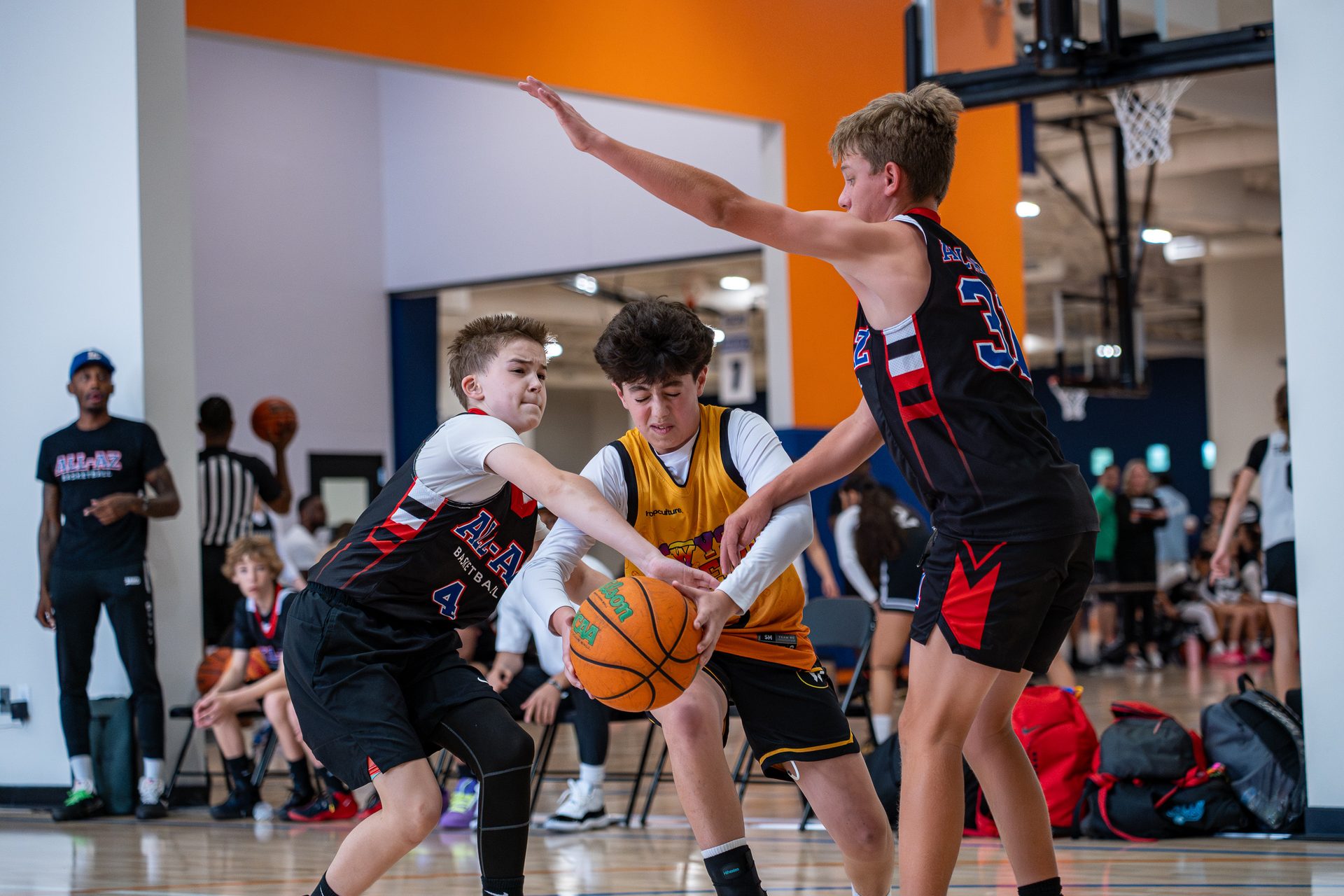
A Swysh Den club team tryout is a free, open evaluation for players entering grades 5 through 11 who want to move from recreational basketball into a competitive roster. It runs at our indoor facility at 8212 E Evans Rd in Scottsdale, it costs nothing to attend, and coaches use it to judge six things: ball handling under pressure, shooting mechanics and consistency, defensive footwork, decision making, coachability, and effort. If your player is on the fence, the tryout itself is a free skills evaluation, so there is no downside to showing up.
This guide covers what gets evaluated, a real four week prep plan, what to bring, and what to do if your player does not make the roster. Full program details and how to register are on the Swysh Den Club Team page, or you can call (480) 685-8773 and ask us about the next Competitive Club Team Tryouts date.
What coaches actually evaluate at a club tryout
Parents assume tryouts are a shooting contest. They are not. A coach picking a roster is projecting how a player will function inside a team over a full season, and most of that projection has nothing to do with how many threes go in on a given afternoon. The Positive Coaching Alliance, which Swysh Den partners with, tells organizations to publish their selection criteria before tryouts and to name intangibles like coachability and work ethic explicitly alongside skill and athleticism (Positive Approaches for Making Player Cuts, Positive Coaching Alliance). Here is what that looks like in practice.
Ball handling under pressure
Not cone drills. Can the player keep their head up, protect the ball with their off hand, and change direction with a defender live on them? Coaches watch what happens to the dribble when someone gets into the player's body.
Shooting mechanics and consistency
Repeatability beats highlight makes. A coach would rather see the same release ten times in a row from mid range than a hot streak from deep followed by a broken form. Balance, footwork into the shot, and a consistent release point are the tells.
Defensive footwork
Stance, slide, closeout, recovery. Defense is the most coachable place to show effort, and it is where players who are not the best scorers in the gym separate themselves fastest.
Decision making
In live play, does the player see the extra pass? Do they know when to push and when to pull it out? Coaches are grading basketball IQ, not just execution.
Coachability
A coach gives a correction mid drill. Does the player try it on the very next rep, or nod and keep doing what they were doing? This single moment moves more players onto rosters than any skill.
Effort and motor
Sprinting back on defense, diving after a loose ball, communicating on switches. Effort is the one category a player fully controls on tryout day regardless of their skill level.
Three of those six are pure choices, not abilities. A player who is behind on skill can still separate on defense, coachability, and effort, and that is the most useful thing you can tell a nervous kid the night before.
What to do in the four weeks before tryouts
Cramming does not work for motor skills, but four weeks of focused, repeated reps genuinely does. Research on typically developing children found that repeated trials at a procedural task produced measurable gains in both speed and efficiency, with the older age bands improving most on motor tasks (Acquisition of Motor and Cognitive Skills through Repetition in Typically Developing Children, PLoS ONE, 2016). Volume of clean reps, not intensity of a single session, is the lever. Here is a plan that fits around school.
Week 1: baseline and form
Get an honest starting point. If your player is already a member, book a Skills Assessment, which is the same process every new Swysh Den member goes through. If not, spend the first week fixing form under no pressure: shooting footwork from a standstill, one hand form shooting close to the rim, and stationary two ball dribbling. No conditioning yet, no scoring, no keeping track of makes. Just clean movement.
Week 2: volume
Now stack reps. This is where our Dr. Dish shooting machines on the dedicated shooting courts do the heavy lifting, because the machine rebounds and passes the ball back instead of your player jogging after it. A 30 minute machine block produces vastly more shots than 30 minutes of casual shooting. Pair that with the dribbling stations for handle work and the Interactive Wall for reaction and decision speed. Target three or four sessions this week.
Week 3: pressure
Skills that only exist in an empty gym do not survive a tryout. Week 3 is live: pickup, a skills clinic with competitive drills, or a rec game. The goal is to make the handle and the shot work with a defender attached. If there is one specific hole, this is the week to book 1-on-1 training and attack it directly instead of hoping it fixes itself.
Week 4: sharpen and rest
Cut the volume roughly in half. Short, crisp sessions. Free throws, defensive slides, and shots from the two or three spots your player is actually going to shoot from in a tryout. Sleep matters more than one more hour in the gym this week. If nerves are the real obstacle, our Mental Performance resources exist for exactly this, and competitive basketball is as much a mental game as a physical one.
One caution worth stating plainly. The American Academy of Pediatrics frames sports readiness as having the physical, mental, and social skills to meet the demands of a sport, and notes that children develop at very different rates, so age alone is a poor readiness test (Is Your Child Ready for Sports?, HealthyChildren.org, American Academy of Pediatrics). Four weeks of prep should build a player up, not burn them out before the tryout starts.
What to bring and what tryout day looks like
Keep it simple. Bring indoor basketball shoes (a separate pair from the ones worn to school, so the soles are clean and grippy), athletic shorts and a plain t-shirt, a full water bottle, and any inhaler or brace your player normally uses. Arrive 20 minutes early. Rushing in late is the worst possible first impression, and the warmup is already being watched.
A tryout typically opens with a warmup and dynamic stretching, then moves through stations: ball handling, shooting, and defensive movement. Coaches then run live play, usually small sided first and then full court, because live play is where decision making and effort become visible in a way that stations cannot capture. Expect coaches to give corrections during drills. That is not criticism, it is a test, and how your player responds is part of the evaluation.
Parents: watch from the stands and stay quiet. Coaching from the sideline during a tryout puts your player in the position of choosing which voice to follow, and it never helps. Everything happens fully indoors and air conditioned at our facility, which means no heat variable to plan around, even in August. If you have never been inside, take a look at the training and facility page first.
What happens if your player does not make it
Some players will not make the roster, and pretending otherwise does no one any good. What matters is what happens in the two weeks after.
The Positive Coaching Alliance's guidance to coaches is that a cut reflects fit with a specific team on a specific day, not a verdict on the player, and that every cut player should leave with a specific assessment of strengths, growth areas, and concrete steps to improve (Positive Approaches for Making Player Cuts, Positive Coaching Alliance). Ask for that feedback. Write it down. It is the most valuable thing your player takes home from the day.
Then put it to work. The two direct paths at Swysh Den are our skills clinics, which are group sessions built around exactly the fundamentals a tryout exposes, and 1-on-1 training, which is the right call when the feedback names one specific hole. Our youth leagues keep the player in live games while they close the gap, and league minutes are what turn drill work into real basketball. A player who leaves a tryout with feedback, a plan, and a gym to work in is in a better spot than one who made a roster and never got told what to fix.
Club ball vs rec league, in one paragraph
Club is a tryout based roster with a higher level of competition and more demanding coaching. Rec is open enrollment, focused on playing time and development. Neither is better, they solve different problems, and plenty of players should stay in rec for another season. We have covered the full decision in Youth Recreational vs. Competitive Basketball Leagues: How to Choose in Scottsdale, and the readiness question specifically in Is Your Child Ready for Competitive Basketball? A Scottsdale Parent's Checklist. Read those before you decide.
Frequently asked questions
What age can try out for the Swysh Den Club Team?
Tryouts are open to players entering grades 5 through 11. Younger players who want a competitive track should look at our skills clinics and youth leagues first, then try out when they reach 5th grade.
Does my kid need club experience to try out?
No. Tryouts are open, and players coming straight from rec leagues try out every year. Coaches are evaluating current ability plus coachability and effort, not a resume of past club teams.
How much does a Swysh Den club team tryout cost?
Tryouts are free and registration is free. Call (480) 685-8773 or email admin@swyshden.com to ask about the next tryout date and to get your player on the list.
How many roster spots are there?
Roster size depends on the age group and how many teams we field in a given season, so it is not a fixed number. Ask us when you register for a tryout and we will tell you what we are carrying for your player's grade.
What is the time commitment for club team?
Club is a bigger commitment than rec: regular practices plus competitive games, and it runs on a season schedule rather than drop in. The exact weekly commitment varies by age group and season, so confirm it with us before you register.
What should my player bring to tryouts?
Clean indoor basketball shoes, athletic shorts, a plain t-shirt, a full water bottle, and any brace or inhaler they normally use. Arrive 20 minutes early for warmup.
How do I register for the next tryout?
Call (480) 685-8773 or email admin@swyshden.com, or start from the Club Team page. Registration is free.
The next step
If your player is ready to be evaluated, there is no cost and no risk in showing up. If they are not sure yet, a skills clinic or a membership gets them working in the gym now so the next tryout looks different.
Published 2026-08-20
Ready to get evaluated?
Tryouts are free and open to players entering grades 5 through 11. Ask us about the next Competitive Club Team Tryouts date.
See Club Team Tryouts