 Swysh Den
Basketball Defense and Rebounding: A Practice Guide for Scottsdale Youth Players
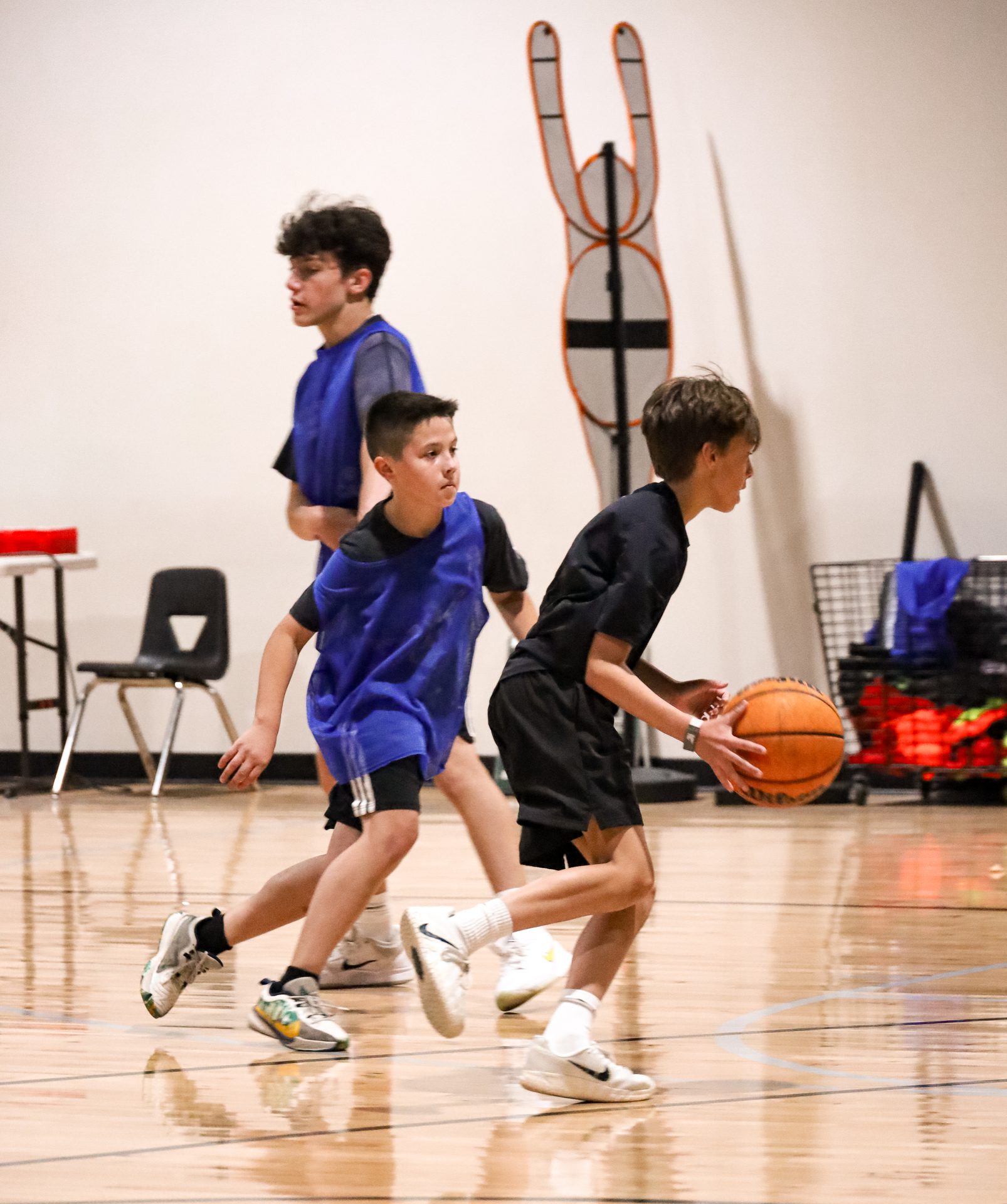
A player stays in front of the ball, forces a difficult shot, then watches an opponent collect the miss. The defensive work was promising, but the possession is still going. Defense, rebounding, and the first pass belong in the same practice.
For Scottsdale families fitting basketball around school and team commitments, that gives an extra gym session a clear purpose. Choose one problem from a recent game, practice it with a partner or small group, and finish by testing the skill in live play. The drills below can be adapted for two to six players using one basket and one ball; an adult or coach should supervise youth sessions and adapt the space and pace.
Start with a question your player can answer
Ask, “Where did the possession get away from us?” Perhaps the defender ran past the shooter, lost sight of a cutter, or secured the rebound but rushed the pass. Each answer leads to different work.
USA Basketball's foundational development guidance includes footwork, rebounding, and team defense alongside shooting and ball handling, and encourages smaller games during this stage. Here, the goal is to connect those skills without introducing an entire defensive system.
Start after a familiar warmup. Agree on the boundaries, keep spare balls out of the playing area, and match partners by size, experience, and control. Begin with cooperative repetitions before adding an opponent who can make real decisions.
1. Close out with enough balance to defend the next move
Set up: One player has the ball on the wing. A defender begins a few comfortable strides nearer the basket. A third person can observe, or the partners can discuss each repetition.
- The defender approaches, slows before reaching the ball handler, and finishes in a balanced stance with a hand raised.
- The offensive player holds the ball or gives a shot fake. The defender stays grounded and leaves room for the shooter's movement and landing.
- Once the stop is controlled, let the offense take one dribble in either direction. The defender moves to stay between the attacker and the basket without reaching across the body.
Rotate after a few turns. If the defender repeatedly flies past, shorten the approach or slow the starting pace. If the drill becomes predictable, let the offense choose between a shot and a drive. This adds the decision found in Jr. NBA's partner closeout activity.
Watch for: The defender can respond after arriving. A hand near the ball means little if their momentum has already carried them out of the play.
2. See the ball and your assignment in 2-on-2
Set up: Put two offensive players on opposite sides of the floor, with a defender assigned to each. Begin with passing only. After each pass, both defenders adjust their position while keeping track of the ball and their own player.
Pause occasionally and ask each defender to identify both. A player who has turned completely toward the ball may have lost a cutter behind them. A player staring only at their assignment may not know a teammate needs help. Jr. NBA's youth defense guidance recommends teaching this shared awareness and using 2-on-2 or 3-on-3 to make responsibilities easier to understand.
Add a slow cut, then allow a drive. Use the team's existing defensive rules to decide who helps and how players recover. Keep communication specific: “I've got ball,” a teammate's name, or “cutter.” Calling loudly without moving into the correct position does not solve the problem.
Adapt it: With three people, one adult can pass while two players rehearse a cut and its defensive response. Add speed only when the players can explain their decisions.
3. Rebound, settle, and choose an outlet
Set up: Use a shooter, a rebounder, and a receiver on the wing. Start unopposed. The shooter takes a comfortable shot; on a miss, the rebounder tracks the ball, catches with two hands when possible, and lands balanced. Then they turn to see the receiver and deliver a pass the receiver can handle.
Rehearse misses from different spots. A ball that comes off long requires movement away from the rim; standing directly underneath the basket is not a complete rebounding plan.
Next, introduce a cooperative opponent on the ground. Practice recognizing that player and establishing position before pursuing the ball. Let a coach teach legal boxing-out technique. No pushing, holding, swinging elbows, or stepping beneath someone in the air. Stop contested repetitions if either player loses control.
Finally, add an outlet decision. An extra defender can cover the first receiver, or the receiver can relocate. The rebounder looks again and protects possession instead of throwing automatically. For beginners, pause the pressure after the catch so they can practice a legal pivot and read the floor.
Watch for: The receiver helps by showing a clear target and moving into a passing lane. The rebounder is not responsible for creating an outlet alone.
4. Play until possession is actually secured
Finish with short rounds of 2-on-2 or 3-on-3. Give each team the same number of offensive possessions. Award the defense a practice point when it takes possession legally and completes a controlled pass to a designated receiver or coach outside the play.
A missed shot by itself earns no point; an offensive rebound keeps that possession alive. If someone fouls, stop and reset according to the rules agreed before the round. Players should never earn an advantage from unsafe contact.
After each round, name one useful action: a balanced closeout, an early call, or a rebound collected outside the lane. Then repeat with one correction. This keeps the feedback tied to something players can do again.
Track habits that explain the result
Observe a small, consistent sample of possessions and record one or two details:
- Closeouts: Did the defender arrive under control and respond to the next move?
- Awareness: Did they notice their assignment moving before a reminder?
- Rebounds: Did they pursue the miss and secure it without a foul?
- Outlets: Did they find an open receiver and complete a catchable pass?
Compare similar situations across sessions. A player can make a better decision even when an opponent makes the shot. These observations guide the next practice; they are not universal readiness scores or promises of playing time.
Plan the right court session in Scottsdale
Swysh Den is indoors and air conditioned at 8212 E Evans Rd, Scottsdale, AZ 85260. For a small group bringing its own coach, court rental options include full, half, and junior courts. Ask which space suits your players and drills, and have staff confirm availability and pricing before organizing the group.
If your player needs feedback, skills clinics include defensive work and game-play drills. Individual training allows a more focused request, such as controlling closeouts or reading an outlet. Confirm the clinic's current focus and age fit rather than assuming every session follows this plan.
Check the live schedule or call (480) 685-8773 before leaving home. Facility opening hours do not guarantee an available basket for a group workout.
Common questions
Can a beginner practice defense and rebounding?
Yes. Start with balanced movement, seeing the ball and another player, and unopposed catches. Introduce decisions and competition gradually, with coaching suited to the player's experience.
What can we do with only two players?
Practice controlled closeouts and take turns shooting and rebounding. After a miss, the shooter moves to a visible outlet position. Save contested rebounding for appropriately supervised practice.
Should smaller players work on rebounding?
Yes. They can practice recognizing where misses travel, getting to available space, securing the ball, and passing. Matchups should be appropriate; height does not remove the need to learn those decisions.
Bring one defensive question to your next session. Request training at Swysh Den and tell us the situation your player wants help with, their age, and their experience.
About Swysh Den Basketball
Swysh Den is an indoor basketball training facility at 8212 E Evans Rd in Scottsdale, Arizona, founded by Steve Moses and opened in August 2025. Our coaching staff runs youth memberships, leagues, camps, club team training and 1-on-1 development on climate-controlled courts equipped with Dr. Dish shooting machines, dribbling stations and an interactive training wall. Questions about a program? Call (480) 685-8773.
Put your practice plan to work
Find a session that fits your player at Swysh Den in Scottsdale.
Book a Free Trial